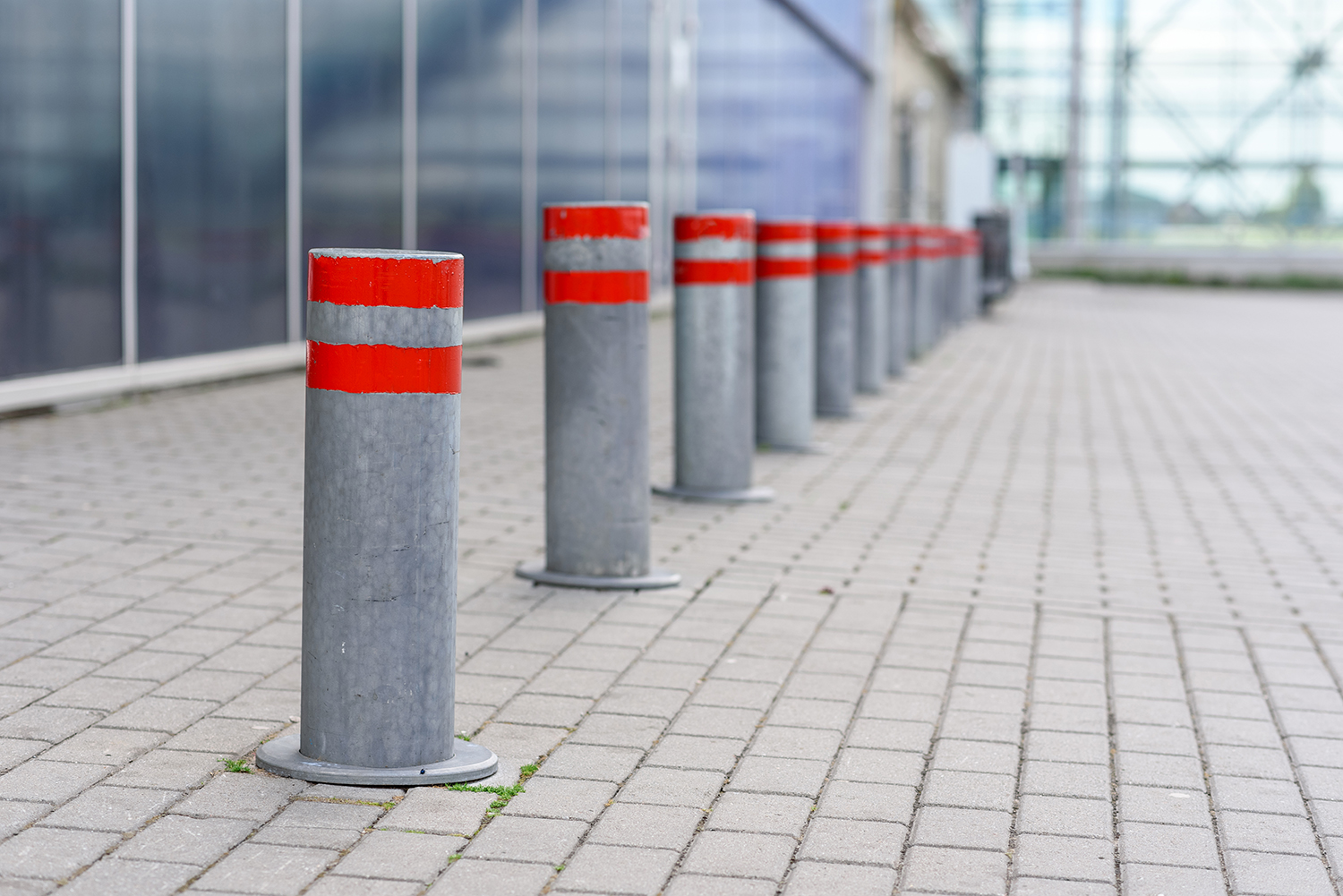
When a Parking Bollard Installation Permit Is Required
A permit is mandatory whenever parking bollards are to be installed on public land, such as pavements or roadways, to protect vehicle entrances, driveways, shop windows, emergency exits or other sensitive areas. Authorisation is also required for installations in front of private access points visible from a public road.
Each municipality has its own regulations governing how to apply, which types of bollards are permitted, and the distances to be maintained from the roadway, junctions or pedestrian routes. Replacing or repositioning existing bollards may also require a new permit.
What the Parking Bollard Permit Covers
The municipal permit ensures bollards are installed in compliance with regulations, avoiding hazards, obstructions to traffic and irregular situations. It helps protect the proper use of public land, the safety of pedestrians and vehicles, and the urban aesthetic.
The permit also protects the applicant from potential legal liability in the event of damage to third parties or disputes with the authorities. Installing bollards without authorisation can lead to forced removal, penalties and an obligation to restore the area.
Who This Service Is For
This service is designed for anyone wanting to install bollards in areas affected by illegal parking, dangerous manoeuvres or unauthorised occupations:
- Private individuals wanting to protect a driveway or private access point.
- Condominium administrators managing shared areas that need protecting (e.g. courtyards, ramps, condominium pavements).
- Businesses with shop windows, loading/unloading areas or entrances blocked by illegally parked cars.
- Technical firms and professionals working on urban regeneration projects, construction sites or street furniture.
What Our Full Service Includes
We offer a complete, professional service to apply for the bollard installation permit:
- Technical survey of the area to determine the correct position and distances.
- Regulatory check and review of local constraints (e.g. pedestrian zones, protected areas).
- Preparation of documentation: site plans, technical descriptions, reports and photographs.
- Completion and submission of the application to the relevant municipality.
- Technical and administrative support through to the issuing of the clearance.
We can also help you choose bollards that comply with local regulations and coordinate with suppliers or installers.
Documents Required
To submit the application correctly, you’ll need:
- Site plan of the area, showing the exact planned position of the bollards.
- Up-to-date photographs of the current condition of the site.
- Technical description of the bollards to be installed, including materials, dimensions and fixing method.
- ID document of the applicant (private individual or legal representative).
- Municipal form completed according to the administration’s guidelines (we take care of this for you).
Timeframes and Costs
Permit issuing times vary by municipality but generally fall between 5 and 20 working days. Extensions may apply for areas subject to restrictions or requiring municipal site inspections.
Costs depend on several factors:
- Number of bollards requested.
- Model and material chosen (cast iron, steel, flexible, retractable, etc.).
- Municipal charges for the occupation or authorisation of the works.
We provide tailored, transparent quotes, including any additional charges.
What Happens Without a Permit
Installing bollards without authorisation can have serious consequences:
- Fines and penalties from the local police.
- Mandatory removal and restoration of the site.
- Civil and criminal liability in the event of damage to persons or vehicles.